
Puja is a few weeks away; the guest list is getting longer, and there’s a damp spot on the living room wall that wasn’t there before the monsoon. If you’re looking for a solution for a wall in Kolkata right now, you’re not alone. This is a common problem that painters and contractors in the city face every year as Durga Puja approaches. It happens after Bhadra month, when monsoon moisture finally shows up on the walls, just as people get ready for visitors.
The good news is that most of what you’re seeing doesn’t need a renovation before Ashtami. It just needs the fix for the right problem, and knowing which is which is important.
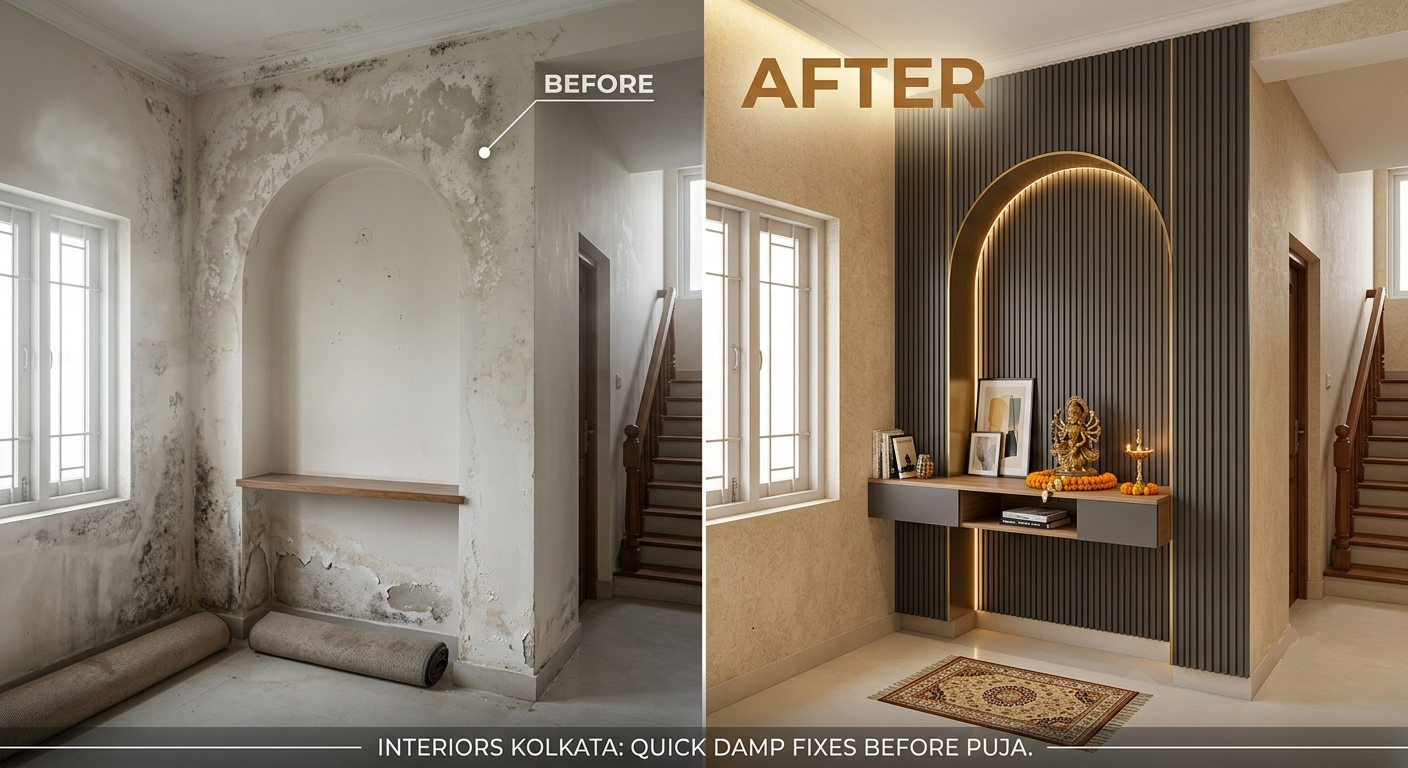
How to Fix Damp Wall Before Durga Puja
Before reaching for a paintbrush it’s helpful to understand what you’re actually dealing with. Not all damp spots are the same. Treating the wrong one the wrong way is why so many homes see the same stain again the next year.
Broadly, damp walls before Puja fall into three categories:
- Surface dampness that dries out on its own once the rain stops, usually just needs cosmetic touch-up
- Nona dhora, the salt-crusted, powdery patches Kolkata homeowners know well, caused by rising dampness carrying dissolved salts up through brick and plaster
- Active seepage from a source that’s still leaking (a terrace, a pipe, a window frame), which will keep coming back until the source itself is sealed
The quick fixes below work well for the first two types especially if you’re working against a Puja deadline. Active seepage from a source is the one case where a quick fix won’t work, more on that below.
Quick Damp Wall Solution Kolkata: 5 Fixes You Can Do Before Guests Arrive
1. Let It Dry Out Completely First
This sounds obvious, but it’s the step most people skip because of time pressure. Painting or filling a wall that’s still holding moisture traps that dampness underneath, and the patch resurfaces within weeks, often worse. If you have even ten to fourteen days before Puja, run a fan directly on the damp area for a few hours a day, or use a dehumidifier if the room is closed and stuffy. A wall that feels cool and slightly moist to the touch isn’t ready for paint yet.
2. Scrape, Don’t Just Repaint
If the patch has any bubbling, flaking or a powdery white crust (classic nona dhora), painting over it will not work. Scrape the damaged plaster back to a firm surface first. Yes, this takes an extra evening. Painting over active efflorescence is one of the most common reasons the same stain comes back within a single season.
3. Use a Damp-Block Primer, Not Regular Primer
Once the surface is dry and scraped clean, use a dedicated damp-block or alkali-resistant primer before your topcoat, not the regular wall primer used elsewhere in the house. These primers are specifically formulated to seal residual moisture and salt migration, which ordinary primer isn’t designed to handle. This one substitution is the difference between a fix that lasts through Puja season and one that lasts through Puja week.
4. Match, Don’t Just Cover
If you’re short on time and can only fix one or two patches rather than repainting the full wall, use a paint sample to match the existing wall color as closely as possible before touching up just that area. A poorly matched patch is often more visually distracting to guests during Agamani and Puja visits than the original stain, especially under the string lights and decor most homes put up for the season.
5. Improve Ventilation in the Room, Not Just the Wall
A damp patch in a room with poor airflow, a wall next to a bathroom, a corner on the ground floor or a room that stays closed most of the day will often return within weeks even after a good repaint. Opening a window for an hour a day, or running an exhaust fan in adjoining bathrooms more regularly, helps lower the humidity that causes the problem in the first place. It costs nothing but makes a big difference in how long your quick fix lasts.
What These Quick Fixes Won’t Solve
If you have already repainted a patch one or two times over the few years and it keeps returning, or if the damp area is getting bigger, feels wet instead of just damp, or is paired with a musty smell, then you are probably dealing with an active seepage source, or a nona dhora wall treatment situation that’s gone past the surface level. In that case, a five-step DIY fix might make your home look acceptable during this Puja but the real issue needs proper civil repair. You need to find and seal the real source – whether its a terrace waterproofing failure, a plumbing leak inside the wall or rising damp from ground moisture.
This situation is very common in old homes. North Kolkata heritage homes, many of them a century old or more, often deal with rising damp as a structural reality of the building’s age and original construction materials, not something a coat of paint will ever fully solve. Newer buildings in areas like Salt Lake and New Town tend to see a different pattern: seepage from a specific point of failure such as a terrace membrane or a bathroom wall, which is usually more straightforward to trace and seal. South Kolkata’s older flats often sit somewhere between the two, depending on the building’s age and how well previous waterproofing has held up.
Last-Minute Decor Tips If You’re Still Waiting on a Full Fix
Sometimes the timing just doesn’t work out. You might notice the patch close to Puja or the professional repair team may only become available after the festival season ends. If you’re doing last-minute decoration before Puja and a stubborn damp patch is still visible a few simple tricks can help more than expected:
- Hang a wall décor piece, mirror, or fabric drape directly over the patch rather than trying to fully hide the whole wall.
- Use warm lighting, such as string lights or a floor lamp, but angle it away from the damp area. Direct light draws attention to texture and unevenness.
- Add a tall plant or floor decor piece in front of a lower-wall patch, a common and genuinely effective trick during Puja home styling.
- Focus your decoration budget on the entryway and living room, where guests spend the most time, rather than spreading touch-ups across every room.
None of these steps replace a real fix but they help you present a clean home for the festival while making sure the proper repair gets scheduled properly, and not rushed.
When to Call a Professional Instead of DIY
| Situation | DIY Is Fine | Call a Professional |
|---|---|---|
| Small patch, dries fully, no crust or bubbling | Yes | No |
| Powdery white crust (nona dhora), patch under 1 sq ft | Yes, with scraping and damp-block primer | Recommended if it returns next year |
| Patch is growing or feels wet to touch | No | Yes |
| Same spot repainted more than once in past years | No | Yes |
| Musty smell, no visible source | No | Yes |
| Patch near a terrace, bathroom wall, or ceiling junction | No | Yes, likely an active leak source |
Can I paint over a damp wall just for Puja and fix it properly later?
You can, and many Kolkata homeowners do this every year. Just make sure the wall is fully dry and scraped of any loose or crusted plaster first, and use a damp-block primer rather than regular paint straight over the patch. This buys you a presentable wall through the festival, but treat it as a temporary fix, not a permanent one, especially if the patch has appeared in the same spot before.
What causes nona dhora, and can it be fully removed?
Nona dhora is caused by dissolved salts carried upward through brick and plaster by rising moisture, which crystallize on the surface as the water evaporates, leaving a powdery, often whitish crust. Surface treatment (scraping and sealing) manages the visible symptom, but if the wall keeps developing it season after season, the actual moisture source, often rising damp from the ground or a nearby leak, needs to be addressed for a lasting fix.
Is it worth starting a full home renovation right before Puja?
Generally no, unless the damage is significant enough to be a safety concern. Most contractors, including painters and civil repair teams, are heavily booked in the weeks immediately before Puja, and rushed work rarely holds up well. A quick, honest fix now, with a proper home renovation scheduled for after the festival season, is usually the more practical approach.
How long does a damp-block primer take to properly cure before painting over it?
This varies by product, but most damp-block primers need at least 24 hours to cure fully before a topcoat, sometimes longer in humid conditions. Painting over it too early is a common reason the fix doesn’t hold as long as expected, so it’s worth building that extra day into your timeline if you’re working close to Puja.